Bananas seem to have one job, and most of us feel like we are always a day behind it. Green on Monday, spotted by Wednesday, and suddenly too soft for anything but banana bread by the weekend.
That fast turnaround comes down to a gas bananas make themselves as they ripen. Once you understand how it works, you can slow it down.
Why Bananas Ripen So Quickly
Bananas produce a natural gas called ethylene as they ripen, and that gas is what softens the fruit and turns its starches to sugar. The catch is that ethylene does not just affect the banana giving it off. It speeds up ripening in any fruit sitting nearby.
That is why a banana sitting next to apples, or bunched tightly with other bananas, tends to brown faster than one kept apart.
Keep Them Away From Other Fruit
Store your bananas apart from apples, pears and other ethylene sensitive fruit, in a separate bowl or a different part of the counter. Bunched fruit bowls look nice, but they are one of the biggest reasons produce turns overripe at the same time.
Bananas also ripen faster inside a closed paper bag, which traps the gas. That trick is useful when you want them ripe fast, and worth avoiding when you do not.
Let Them Hang If You Can
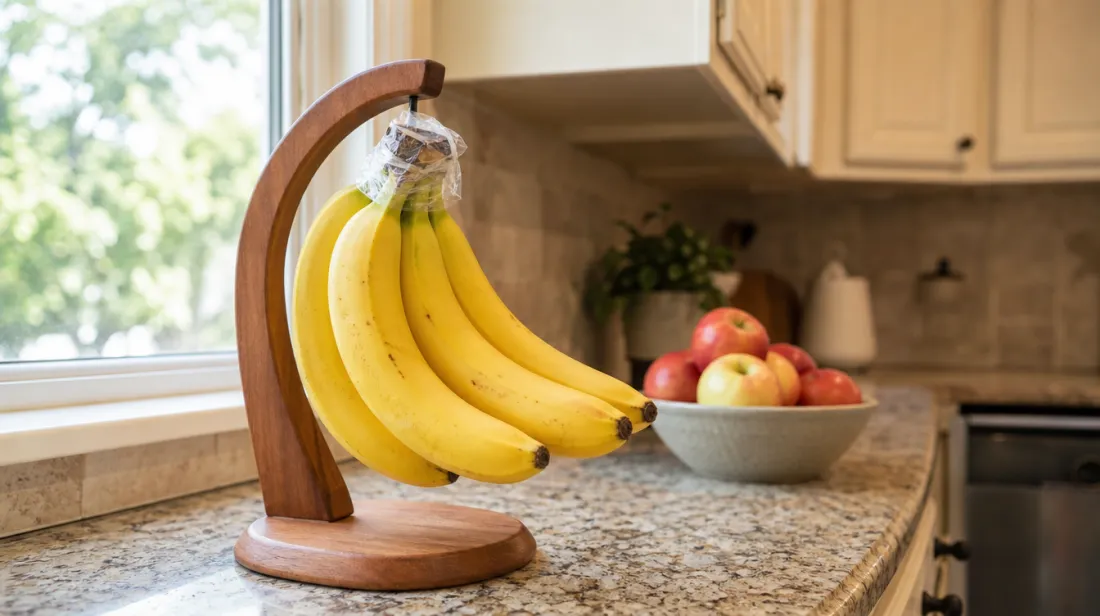
Bananas left flat on a counter bruise where they touch the surface, and a bruised spot tends to brown and soften faster than the rest of the fruit. A banana hook or hanger keeps the bunch off the counter so the weight of the fruit rests on the stem instead of on the bananas themselves.
This is a small thing, but it adds up over several days. Less bruising means a more even bunch, with fewer spots that go soft and dark before the rest.
Wrap the Stems
Most of the ethylene gas escapes through the stem, or crown, where the bananas connect. Wrapping that area tightly in plastic wrap slows the gas from escaping and can noticeably extend how long the bunch stays yellow before turning spotted.
- Wrap the whole stem cluster in plastic wrap, pressing it snug against the stems.
- Separate one or two bananas from the bunch if you want those to ripen faster for eating right away.
- Rewrap the stem after removing a banana so the rest of the bunch keeps its head start.
What Refrigeration Does and Does Not Do
Putting ripe bananas in the refrigerator slows down further ripening, which is useful once they are exactly as ripe as you want. The skin will turn brown or even black in the cold, but the fruit inside usually stays fine to eat for several more days.
This only works well once a banana is already ripe. A green banana in the fridge tends to stall out and never ripen properly, even after it warms back up.
Bananas Past Their Best Are Not Wasted
A banana that has gone soft and speckled with brown is not spoiled. It is simply past the point most people want to eat it plain, and often exactly where it needs to be for banana bread, pancakes or a smoothie.
Peeling and freezing overripe bananas is an easy way to hold onto them for baking later, so nothing has to go in the trash just because it browned faster than you expected. Break them into chunks first, so you can pull out only as much as a recipe needs, and use them within a few months for the best taste.