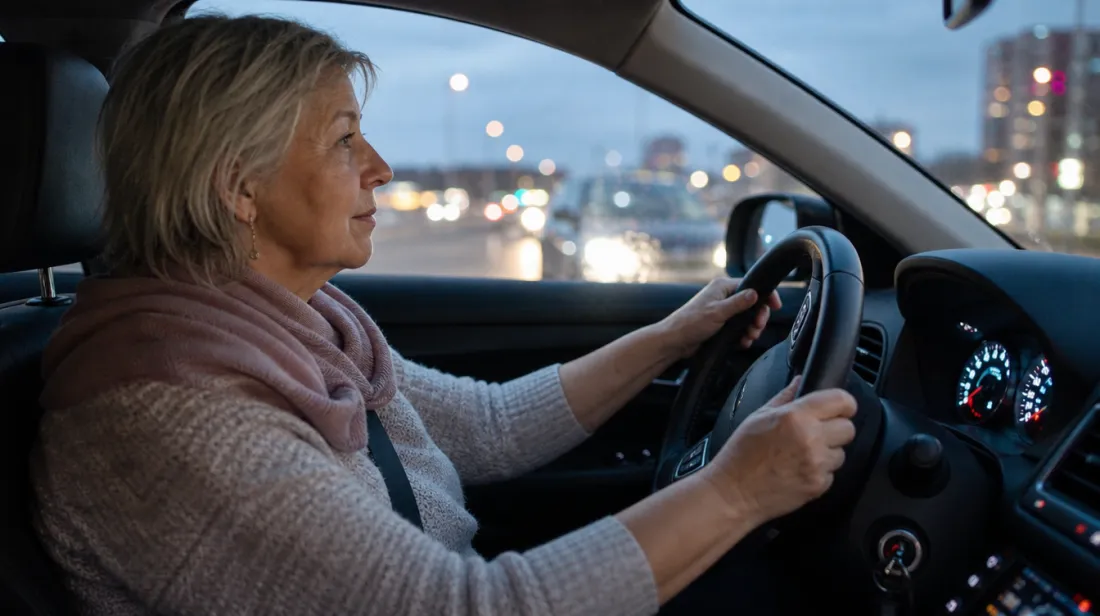
If driving after dark feels harder than it used to, you are not imagining it. Oncoming headlights seem brighter than they should. Street signs and lane lines take a beat longer to read.
This is common once you pass 60, and there is a plain reason for it. Your eyes need more light and more time to adjust than they used to, and a few small habits can ease a lot of that strain.
What Changes in Your Eyes After 60
As you get older, the pupil, the black center of your eye, does not open as wide in the dark as it once did. Less light reaches the back of your eye, so everything looks dimmer.
At the same time, the lens inside your eye tends to yellow slightly and let in less light. Your eyes also take longer to recover once a bright light, like an oncoming headlight, passes and fades. That slower recovery is why glare can leave a bright blur hanging in your vision a beat longer than it used to.
None of this means something is wrong with you. It is a normal part of getting older, and it happens to nearly everyone eventually.
Clean Your Windshield and Headlights First
Before anything else, look at your windshield in daylight. A film of dust, bug residue or wiper streaks scatters light from oncoming cars and makes glare worse. Clean it inside and out, not just the outside.
Old, hazy headlights send less light onto the road, and dirty ones make it worse. A wipe with a cloth, or a headlight cleaning kit from an auto parts store, can help.
- Wash the windshield inside and out, including the areas near the mirrors.
- Wipe down your headlights and check that both are working evenly.
- Replace wiper blades if they streak, since a smeared windshield catches glare.
Small Changes Inside the Car
Turn your dashboard lights down as low as you can while still reading them clearly. A bright dashboard makes your eyes adjust to that light instead of the dark road ahead.
Tilt your rearview mirror slightly, or switch it to night mode if it has one, so headlights behind you do not reflect straight into your eyes.
Be cautious with glasses sold specifically as night driving glasses with a yellow or amber tint. Many eye doctors say these can reduce the light reaching your eyes at exactly the time you need more of it, not less. Ask your own eye doctor before buying a pair.
Plan Before You Drive
Give yourself time. Rushing in the dark, on an unfamiliar road, is where small vision changes turn into real stress.
If you can, choose routes you know well after dark, with good street lighting, over shortcuts through unlit back roads. Leave a few extra minutes so you are not tempted to speed up to make time back.
See Your Eye Doctor Every Year
A yearly eye exam is the simplest way to catch changes early and make sure your glasses prescription still matches your eyes.
If your night vision suddenly gets worse, or you notice new glare, halos around lights or blurriness that was not there before, call your eye doctor. Sudden or worsening changes are worth checking, not waiting out.
Driving After Dark on Your Own Terms
None of this is about giving up night driving. It is about making the drive easier on the eyes you have now, not the eyes you had at thirty.
Small habits add up. A clean windshield, a dimmer dashboard and a route you know well will not fix everything, but together they take real pressure off your eyes on a dark road.