A freezer is supposed to be where food waits safely until you need it. Too often it becomes where food goes to be forgotten, wrapped in a frost covered mystery bag at the back.
A few common habits are behind most of that waste, and each one is easy to fix once you know what to look for.
Freezer Burn Is a Quality Problem, Not a Safety One
Those gray, dried out patches on frozen meat or bread are freezer burn, caused by air reaching the food and drawing out moisture. It looks unappetizing and can affect texture and taste, but it does not make food unsafe to eat.
You can trim away badly burned areas, or just accept the texture change, and still eat what is underneath. The bigger loss is usually taste and quality.
Not Wrapping Food Airtight
Air is the real enemy in a freezer, not just cold. Loosely wrapped food, or food in a bag with extra air still inside, gets freezer burn much faster than food sealed tightly against the air.
- Press as much air out of freezer bags as you can before sealing them.
- Wrap meat and baked goods tightly in plastic wrap before adding a freezer bag or container.
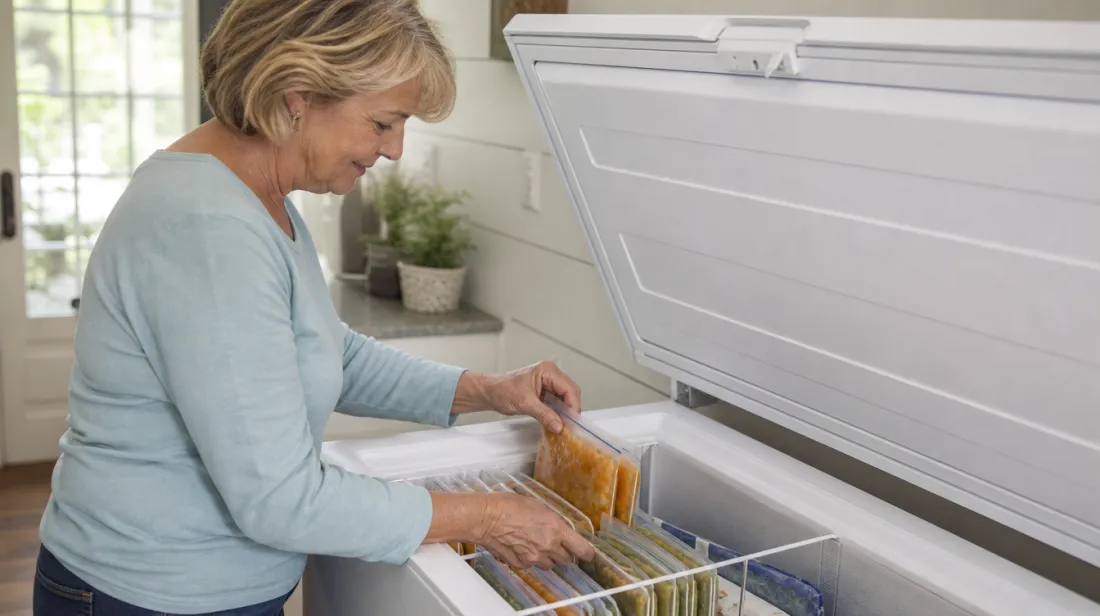
- Use containers sized close to the amount of food, so there is less empty air space inside.
Skipping the Label and Date
Frozen food does not announce its own age. Without a label, it is easy to lose track of what is inside a bag or how long it has been there, and things get pushed to the back and forgotten until they are freezer burned beyond saving.
A piece of tape and a marker, noting the contents and the date, takes a few seconds and saves you from guessing later.
Packing the Freezer the Wrong Way
A freezer actually works better when it is fairly full, since frozen food helps hold the cold when the door opens, and an empty freezer loses its chill faster. That does not mean crammed so tight that air cannot move around the vents, which some freezers rely on to keep an even temperature throughout.
The door itself is usually the warmest part of the freezer, since it warms slightly every time it opens. Save the door shelves for things that hold up fine with small temperature swings, and keep meat, fish and anything you want to last a long time toward the back.
Keeping the Freezer at the Wrong Temperature
A freezer works best at 0 degrees Fahrenheit. Warmer than that, food loses quality faster and forms more ice crystals, which is what makes freezer burn worse and thawed food watery.
An inexpensive freezer thermometer is the only real way to know your actual temperature, since the dial setting and the true internal temperature are not always the same.
Refreezing Without Thinking It Through
Thawing something, deciding you do not need it, and refreezing it is not automatically a problem, but it does affect texture, and it matters how the food was thawed. Food thawed properly in the refrigerator, and still cold, can generally be refrozen. Food left out on the counter for hours is a different situation, where safety, not just quality, becomes the concern.
When in doubt, check current guidance from a source like the USDA rather than guessing.
A Freezer That Actually Saves You Money
The freezer only saves money and food when what goes in eventually comes back out and gets eaten. Airtight wrapping, a label with a date, and the right temperature are the habits that make that likely.
None of this requires new equipment or much extra time. It just means treating the freezer as active storage, not a place where food disappears.