A load that used to dry in forty minutes now takes an hour and a half, sometimes two cycles just to get the towels dry. It feels like the dryer is dying, but that is rarely what is actually going on.
Dryers work by pushing hot air through wet clothes and out a vent to the outside. When something blocks that airflow, the machine runs longer and hotter just to get the same result.
Three spots cause most of the trouble, and none of them require a repair call.
The Lint Screen Might Be the Real Problem
Most people pull lint off the screen after every load and assume that is enough. What often gets missed is a thin film left behind by fabric softener and dryer sheets, which builds up on the screen's mesh over time.
That film is easy to miss because the screen still looks clean to the eye. Run your finger across it. If it feels slick or waxy instead of dry, that film is blocking airflow even though no lint is visible.
How to Wash the Screen
Washing the screen takes only a few minutes and makes a real difference.
- Pull the lint screen out and remove any loose lint by hand first.
- Wash it in the sink with warm water and a little dish soap, since dish soap cuts through the waxy film better than plain water.
- Scrub gently with an old toothbrush or soft brush if the film does not rinse off right away.
- Let it dry completely before putting it back in the dryer.
Doing this every month or two keeps the film from building back up to the point where it slows the machine down again.
The Vent Hose Behind the Dryer
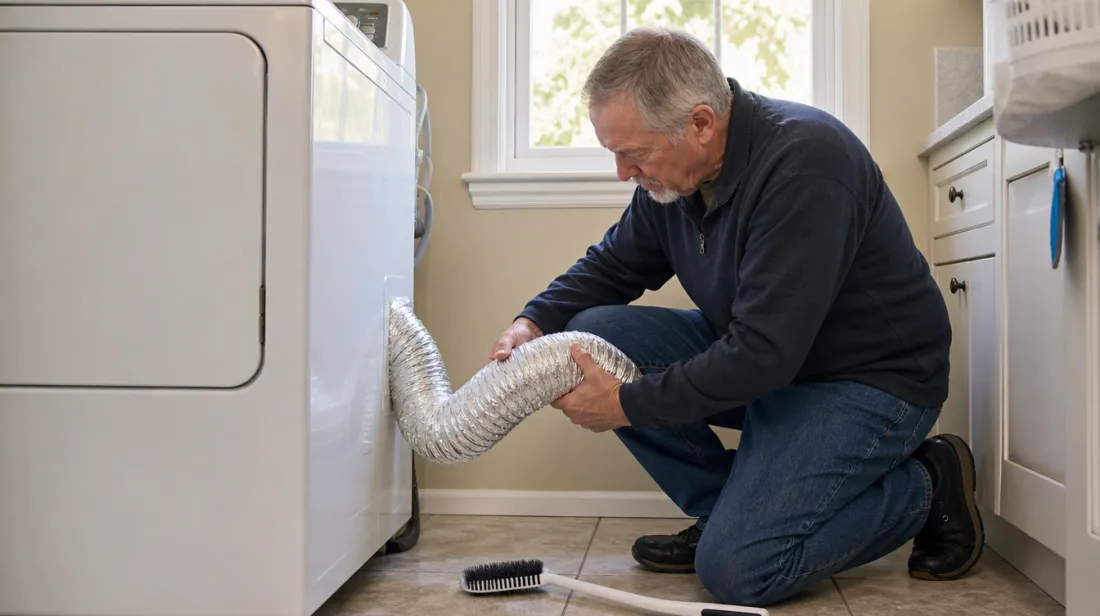
The hose running from the back of the dryer to the wall carries hot, damp air outside, and lint travels along with that air the whole way. Over time it collects inside the hose, especially at any bend or kink.
Pull the dryer out from the wall and check the hose for lint packed inside, and make sure it is not crushed or bent at a sharp angle, which restricts airflow all on its own. A rigid metal hose handles airflow better than the flexible plastic kind, if yours needs replacing.
The Flap Outside Your House
The vent ends at a flap on the outside wall of your home, and that flap needs to open freely for air to escape. Lint buildup right at the opening, or debris and even nests from small critters, can block it from opening all the way.
Step outside while the dryer is running on a cycle and check that the flap swings open and you can feel warm air coming out. If it barely moves or nothing comes out, the blockage is likely right there or somewhere along the vent between the wall and the outside.
Why This Is Worth Doing Today
Beyond the wasted time and higher energy use, a dryer fighting blocked airflow runs hotter than it is supposed to. Built up lint is a well known cause of house fires, since it is dry, packed tightly and sitting right next to a heat source.
That risk is one more reason not to let a slow dryer become the new normal in your house.
A Dryer That Works Like It Used To
Most dryers that suddenly take forever are not broken, they are just fighting for airflow. Clean the screen, check the hose, check the outside flap, and most loads go back to drying in one cycle.
If you have checked all three and the dryer still runs long, that is a better time to call in a repair person, since something less obvious may be going on inside the machine itself.