That stamped date on a bag of rice or a jar of honey looks like a deadline. For most pantry staples, it is closer to a suggestion.
"Best by" and "sell by" dates are mostly the maker's promise of peak quality, not a safety cutoff. A few pantry staples last so long past that date that tossing them on schedule wastes food for no real reason.
What "Best By" Actually Means
For most shelf stable foods, a "best by" date is the manufacturer's estimate of how long the product will taste and look its best. It is a quality marker, not a safety rule, for the great majority of dry and packaged pantry goods.
Foods that spoil in ways that can make you sick, like fresh meat, dairy or ready to eat deli food, are a different category and deserve more caution with dates. The staples below are not in that category.
1. White Rice
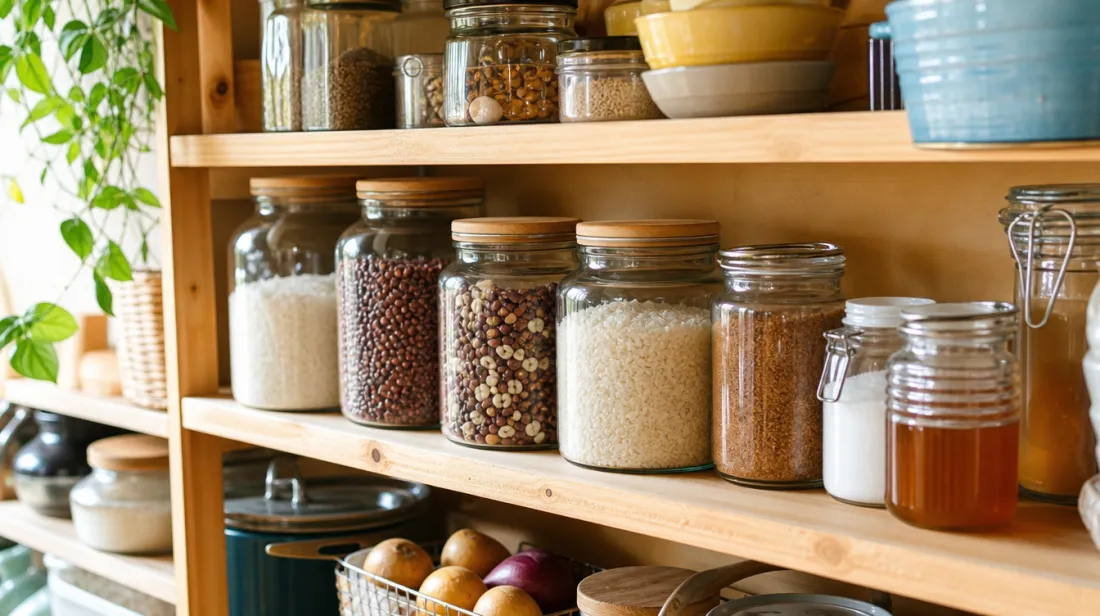
Plain white rice, stored dry and sealed, can last for years past the date on the bag with little real change beyond maybe a slightly different texture when cooked. Its low moisture content makes it a poor environment for the bacteria and mold that spoil food.
Keep it in a sealed container, away from moisture, and it will outlast almost every other item in your pantry.
The main thing that shortens rice's life is moisture and pests, not time itself. A tightly sealed glass jar or a hard plastic container with a good lid keeps out both, and works far better than the paper or thin plastic bag rice is usually sold in.
2. Honey
Honey is naturally low in moisture and acidic enough that it resists spoiling almost indefinitely when stored properly. It may darken or crystallize over time, but crystallized honey is still good. A gentle warm water bath can soften it back to liquid.
The date on a honey jar is largely a formality. Sealed and kept away from moisture, honey stored for years is generally still fine to eat.
The one thing that reliably shortens honey's life is water getting into the jar. A wet spoon, or a lid left loose in a humid kitchen, gives mold a chance it would not otherwise have. Keep the lid tight and the spoon dry, and there is little else to worry about.
3. Salt
Salt is a mineral, not something that spoils. It does not support the bacteria or mold growth that ruins other food, so a container of salt from years ago is chemically about the same as one bought yesterday.
Iodized salt can lose a small amount of iodine potency over a long time, and salt can clump if it gets damp, but neither issue makes it unsafe. Sugar behaves in a similar way, staying safe indefinitely if kept dry, even if it hardens into a block over time.
If a bag of sugar or salt clumps into a solid mass, breaking it apart with a fork or the back of a spoon is usually all it needs. A few dry rice grains dropped into a salt shaker can also help keep salt pouring freely in a damp kitchen. Clumping is not a reason to throw either one away.
Reading Dates With Common Sense
None of this means dates are meaningless. For food that actually spoils quickly, like milk or fresh poultry, follow the date and your own senses.
For dry, shelf stable staples like these, treat the date as a rough guide to peak quality, not a countdown. Look, smell and use your judgment before tossing something that is probably still perfectly good.