Few things are as annoying as a pot of rice that turns into one solid, gluey mass. It happens to good cooks as often as beginners, and it is almost always fixable with a couple of small changes.
The stickiness comes down to starch and how you handle it, from the moment the rice hits water to the moment you finally lift the lid.
Rinse the Starch Off First
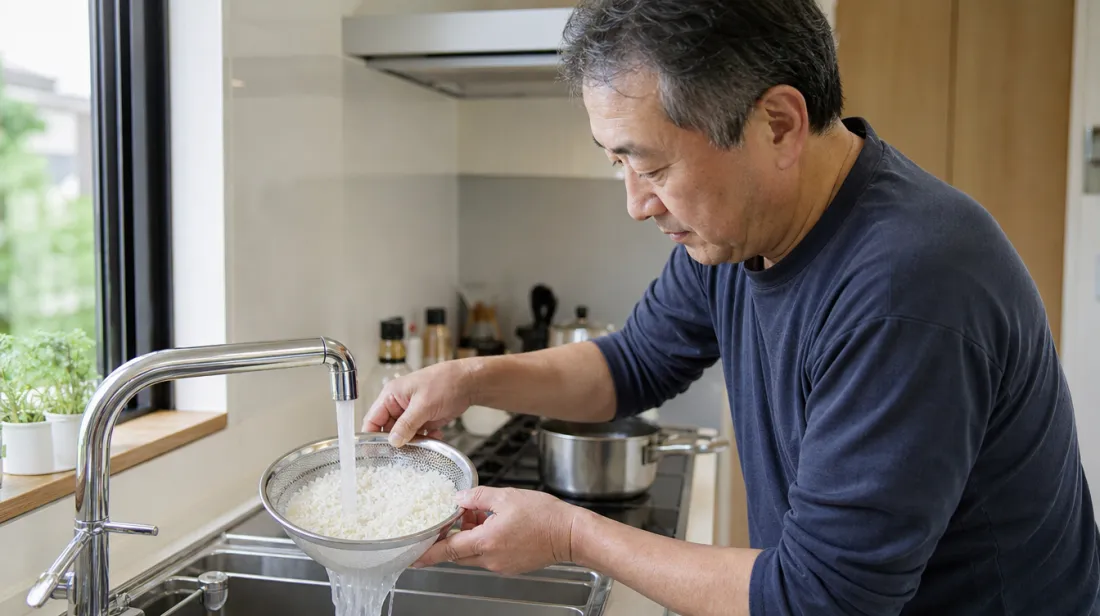
Raw rice grains are coated in loose surface starch left over from milling, and that starch is the main reason rice clumps together in the pot. Rinsing washes most of it away before cooking even starts.
Put the rice in a fine mesh strainer and rinse under cold running water, swishing it gently with your fingers, until the water running through looks mostly clear instead of cloudy white. This usually takes less than a minute.
Get the Water Ratio Right
Too much water leaves rice waterlogged and sticky. Too little scorches the bottom before the rest cooks through. For most white rice, a ratio close to one and a half cups of water for every cup of rice is a solid starting point, though it can vary slightly by the type of rice.
Check the guidance on your specific bag of rice as a backup, since long grain, short grain and other varieties can call for slightly different amounts.
Know Your Type of Rice
Not all rice behaves the same way. Long grain rice, like basmati or jasmine, has less starch and naturally cooks up fluffier and less sticky than short grain rice, which is starchier and clings together more, even after rinsing.
Brown rice keeps its outer bran layer, so it generally needs more water and a longer cooking time than white rice, often closer to 40 to 45 minutes instead of the usual 15 to 20. If you switch between types, expect to adjust the water and the clock, not just repeat the same routine.
Do Not Stir While It Cooks
Once the rice and water come to a boil, resist the urge to stir it. Stirring releases more starch into the water and is one of the fastest ways to end up with gluey rice.
Cover the pot, turn the heat down to low, and leave it alone until the time is up.
Let It Rest, Then Fluff
When the cooking time is done, turn off the heat but keep the lid on for another 5 to 10 minutes before opening the pot. This resting time lets the steam finish the job evenly and firms up the grains.
- Turn off the heat and leave the lid on undisturbed for 5 to 10 minutes.
- Remove the lid and fluff the rice gently with a fork, not a spoon, lifting rather than mashing.
- Serve right away for the best texture.
A fork separates the grains instead of pressing them together the way a spoon tends to.
Small Fixes for Common Rice Problems
If your rice keeps turning out sticky even after rinsing, try slightly less water next time, since too much liquid is the most common cause. If it turns out dry or crunchy, add a splash more water and a little extra cooking time.
Rice rewards small, steady adjustments more than any single trick. Once you find the ratio and timing that work for your stove and your pot, it repeats itself every time.
Write down what worked once you land on it, the water amount, the brand, the time. A pot of rice is a small thing to get right, but it is nice to stop guessing at it every single week.