You walk in the door and there it is, that faint damp smell that was not there a season ago. You cannot always point to where it is coming from, but you know something is off.
That smell is almost never about cleanliness. It is almost always about moisture sitting somewhere it should not be, giving mold and mildew a place to grow.
The good news is the usual sources are a short list, and most of them you can check yourself in an afternoon.
Check the Basement or Crawl Space First
Basements and crawl spaces are the most common source of a musty smell in the whole house, especially after a humid summer or a wet stretch of weather.
Walk around and look for damp patches on the walls or floor, a white powdery residue on concrete, or cardboard boxes that feel soft or swollen. Any of those point to moisture soaking through from outside.
A crawl space with bare dirt or old, torn plastic sheeting on the ground is especially prone to this. Moisture rises straight out of the soil into the air above it.
Look for a Slow Leak
A leak does not have to be dramatic to cause a smell. A pipe under a sink that drips slowly, a toilet with a bad seal, or a roof that lets in a little water during heavy rain can all feed a musty smell for months before anyone notices.
Check under every sink, around the base of toilets, and near any spot where a ceiling has ever shown a water stain. Feel the area, not just look at it. Damp wood or a soft spot in drywall is often the real giveaway.
The AC Drip Pan and the HVAC Filter
Central air conditioning pulls moisture out of the air and drips it into a pan, and that pan can grow mildew if it is not draining properly or gets a little grime built up inside it.
A dirty HVAC filter causes a different kind of trouble. It restricts airflow, which can let moisture sit in the ductwork longer than it should, and it also blows dust and any smell already in the system through every room in the house.
Check the filter and swap it if it looks gray or clogged. If you can reach the drip pan near your air handler, take a look for standing water or slime.
The Washer Gasket Trap
Front load washers are especially good at trapping a musty smell in the rubber gasket around the door, where water and lint sit after every load without ever fully drying out.
Wipe the gasket dry after washes when you can, and leave the door cracked open between loads instead of sealing it shut. A wash cycle run empty with just hot water once a month helps clear out what builds up inside.
Get the Humidity Right
Mold and mildew need moisture to grow, so the simplest long term fix is keeping indoor humidity in a reasonable range, generally somewhere around 30 to 50 percent.
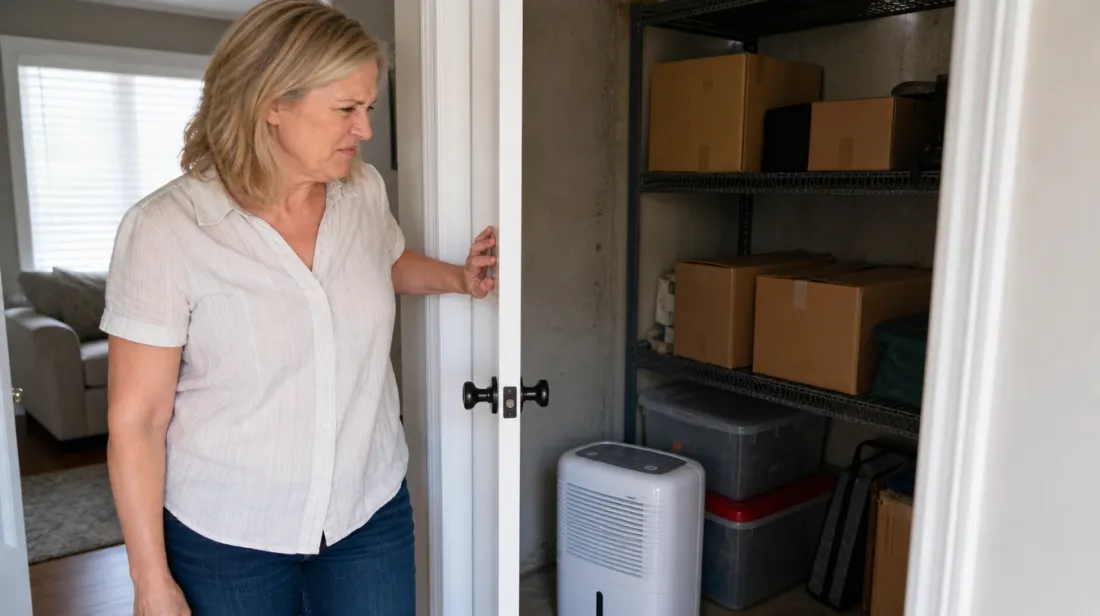
A small hygrometer from a hardware store tells you where your home actually sits. If it reads high, a dehumidifier in a damp basement or a bathroom fan run longer after a shower can bring it back down.
When a Smell Is More Than a Smell
Most musty smells trace back to one of the sources above, and most of them you can find and fix yourself with a little patience.
That said, if you find a large area of visible mold, more than a small patch on a wall or ceiling, that is a job for a professional rather than a bottle of cleaner. The same goes if anyone in the house has been dealing with unexplained coughing, congestion or other symptoms alongside the smell.
Finding the source is most of the battle. Once you know where the moisture is coming from, fixing it usually takes far less effort than living with the smell did.