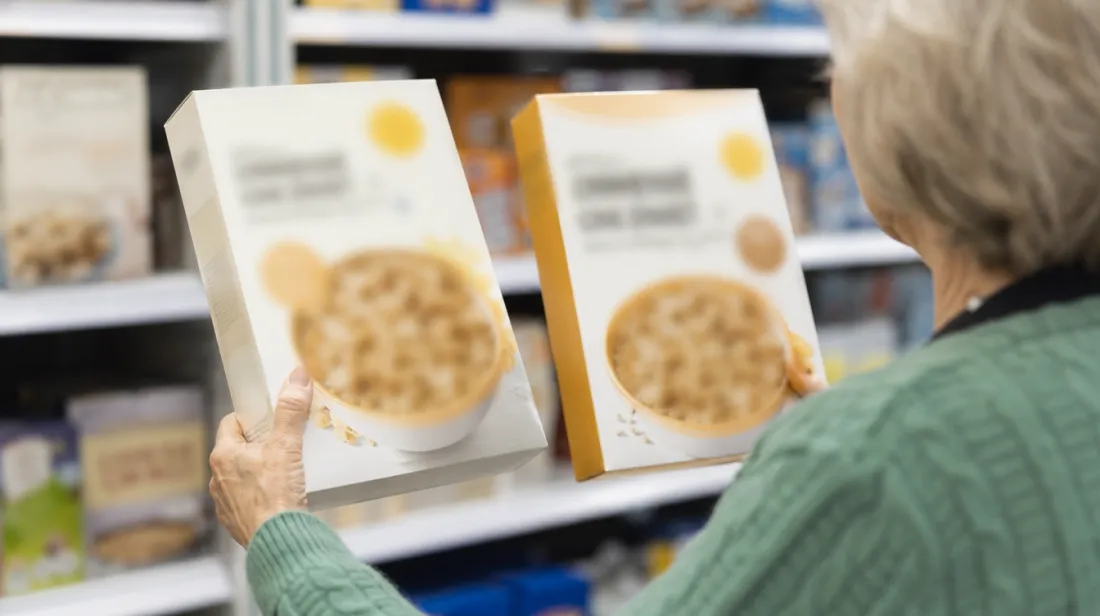
Walk down any grocery aisle and you will see it: a name brand box next to a store brand box that looks almost the same, at a price that is often noticeably lower. Most shoppers walk right past the store brand without a second look.
That habit is often costing you money for no real reason. Store brand items are often made to standards close to the name brand version sitting next to them, sometimes even in the same factory, though that is not true in every single case.
Knowing where the gap tends to be small, and where it is worth paying closer attention, lets you save on the easy swaps without giving up quality where it actually matters to you.
Where Store Brand Tends to Match Up Well
Some categories are especially forgiving for a swap, because the product itself is simple and the ingredients are largely the same no matter who makes it.
- Basic pantry staples like flour, sugar, rice, and dried beans.
- Canned vegetables, canned beans, and canned tomatoes.
- Bottled water and basic cleaning supplies like dish soap or all purpose cleaner.
- Over the counter basics like pain relievers and allergy medicine, where the store brand often uses the identical active ingredient at a lower price.
In these categories, the difference between store brand and name brand is frequently more about the label and the marketing than what is actually inside.
Where It Is Worth Comparing More Closely
A few categories are more personal, where taste, texture, or a specific formula matters enough that it is worth trying before you commit to switching for good.
Coffee, cereal, and snack foods can vary more in flavor from brand to brand, so a store brand swap here is more of a personal trial than a guaranteed win. Skin care and specific medical products, where a particular formula has worked for you in the past, are also worth more caution before switching.
None of this means store brand versions in these categories are worse. It means the payoff is less predictable, so it helps to actually taste or try it yourself rather than assuming.
How to Test a Swap Without Wasting Money
You do not need to switch your whole pantry at once. A smaller test tells you almost everything you need to know.
- Buy the smallest size available of the store brand version.
- Try it side by side with the name brand you already know, if that is practical.
- Give it a real try over a week or two, not just one taste, since first impressions can be misleading.
- Keep a short mental note, or a note on your phone, of which swaps worked and which did not.
Once you know which store brand items you are happy with, buying them becomes automatic, and the savings add up every single trip.
Reading the Label Instead of the Logo
The name on the front of the package tells you almost nothing about what is actually in it. The ingredient list and nutrition label on the back tell you everything that matters.
Placing the store brand and name brand side by side and comparing those two labels takes less than a minute and often shows the ingredients are nearly identical, sometimes in the exact same order.
Where the Real Savings Add Up
The savings from any single swap look small on their own, often just a dollar or two per item. The real savings show up over a full year of regular grocery trips, where those small differences repeat every single week.
A household that swaps even a handful of pantry basics to store brand, while sticking with name brand where taste or a specific product genuinely matters, tends to save a meaningful amount without feeling like it gave anything up.
The goal is not to switch everything on principle. It is to notice where the gap between store brand and name brand is small enough that the price difference is the only thing that actually changes.